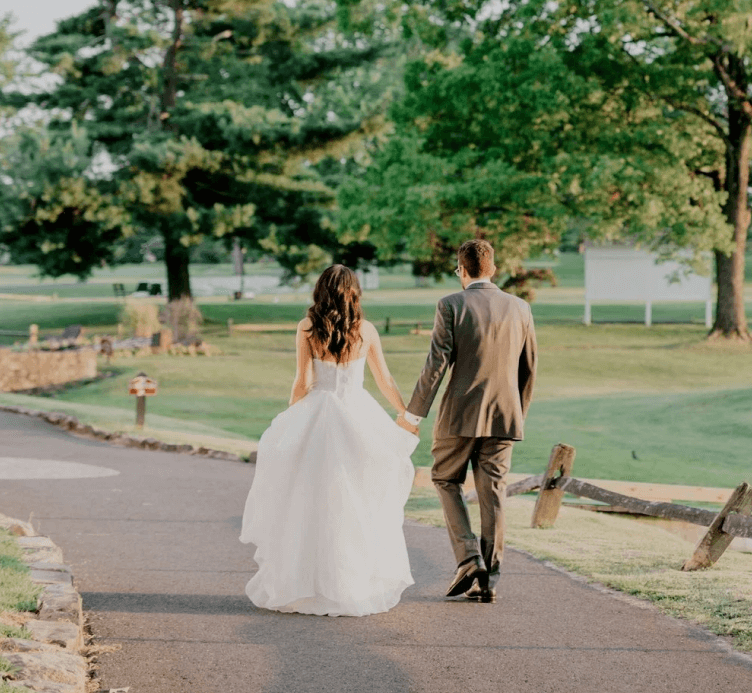

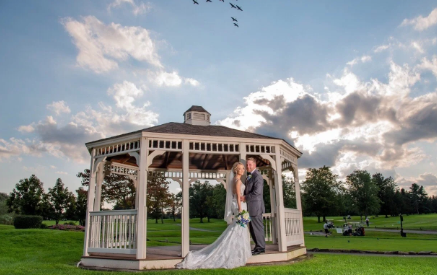
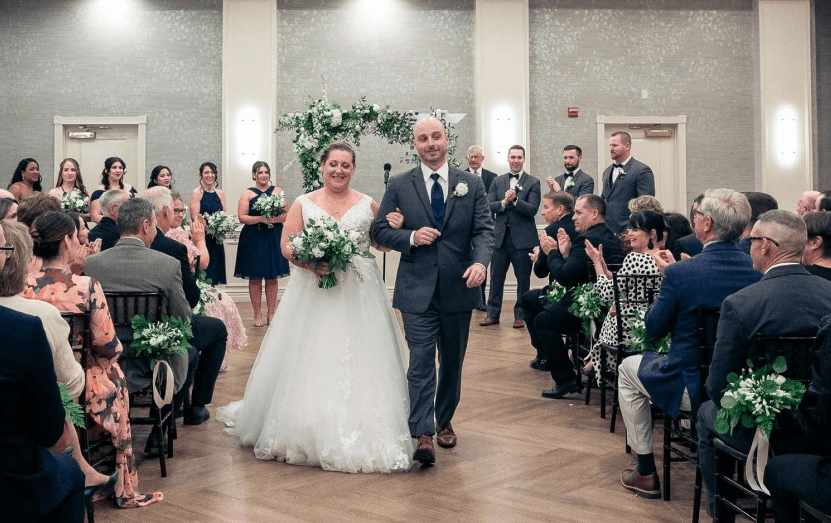
A micro wedding in Bucks County typically means 20 to 50 guests and costs $3,000 to $18,000 all-in — roughly a third to a half of a full wedding. Venue packages start around $595 for a weekday ceremony. Pennsylvania's self-uniting license also means you can legally marry with no officiant, which removes a vendor and a cost.
What counts as a micro wedding?
There's no fixed definition, which is why published statistics disagree so wildly. Roughly:
| Format | Guests | What it looks like |
|---|---|---|
| Elopement | 2–10 | Couple, witnesses, maybe parents |
| Micro wedding | 20–50 | Real ceremony and meal, close circle only |
| Minimony | 5–20 | Small ceremony now, larger party later |
| Full wedding | 100+ | The traditional version |
The practical line is around 40 guests. Below that, you can do things a full wedding can't — a restaurant private room, a weekday morning, a venue's off-peak inventory. Above it, you're back to needing a ballroom and the pricing that comes with one.
What does a micro wedding cost in Bucks County?
$3,000 to $18,000, depending heavily on guest count and how much you outsource.
| Guests | Typical all-in |
|---|---|
| 2–10 | $700 – $4,000 |
| 20 | $4,000 – $10,000 |
| 30 | $7,000 – $14,000 |
| 50 | $12,000 – $22,000 |
For comparison, a full 100–150 guest wedding in Bucks County runs $32,000 to $48,000, and the same wedding in Philadelphia metro runs $45,000 to $75,000.
The reason the savings are so dramatic isn't just fewer plates. Below about 40 guests you stop needing a ballroom, a full bar package, a DJ, a coordinator, and in many cases a photographer for eight hours. Those fixed costs are what make weddings expensive, and a micro wedding sheds most of them at once.
Detailed breakdown: what a small wedding in Bucks County actually costs
Is the trend real?
Growing, but not as dominant as the headlines suggest — and I'd rather you see the disagreement than a tidy story.
Some 2026 industry analyses put micro weddings at around 22% of all weddings, up from 15% in 2023. Others find 18% of weddings had 50 or fewer guests. But The Knot's 2026 study reports only 6% of weddings have fewer than 50 guests and pushes back on the idea that micro weddings have become the norm.
The definitions vary too much for these to be comparable. What's not in dispute: the average US wedding now costs $34,000 to $36,000, money is the number one planning stressor, and roughly half of engaged couples have seriously considered eloping after adding up the numbers.
That's the actual market. Not a trend — a reaction to price.
Where can you have one in Bucks County?
Wedding venues on weekdays. Several venues, including ours, open weekday inventory for small ceremonies at a fraction of weekend pricing. You get real grounds and real photos without a full-wedding budget. Packages start around $595.
Restaurant private dining. For 10 to 25 people, a private room plus a self-uniting license can be a complete wedding for roughly the cost of a nice dinner. Bucks County has good options in Doylestown, New Hope, and Newtown.
Inns and B&Bs. Several Bucks County properties do small weddings, though most are structured around a room booking and often exclude officiant, catering, and rentals. Read what's included carefully.
Public land. Tyler State Park, Peace Valley Park, and Washington Crossing Historic Park all allow ceremonies with the right permit. Cheap, beautiful, and more logistics than people expect — no backup for weather, no restrooms nearby in some spots, and guest-count limits.
Private property. With a self-uniting license, a backyard is legally sufficient. Budget for rentals, and think hard about the rain plan.
How does the legal side work?
Simpler than most people expect, and Pennsylvania gives you an option most states don't.
The license: $85 in Bucks County, including one certified copy. You apply online, both attend a short video appointment to show ID and sign, then wait three days. Valid for 60 calendar days, usable anywhere in Pennsylvania.
The officiant — optional. Pennsylvania issues self-uniting marriage licenses under 23 Pa. C.S. § 1502, and Bucks County states directly that its office issues them. You marry each other, two witnesses sign, and the marriage is fully legal and recognized nationwide.
You don't need to be Quaker. A 2007 federal case, Knelly v. Huggins-Daines, established these licenses can't be denied on religious grounds.
After the ceremony, the marriage return must be filed with the county within 10 days. With a self-uniting license that's your job, not an officiant's — and if it isn't filed, no marriage record exists.
Full detail: how to get married in Bucks County
What do you actually give up?
Worth being honest about, because most micro-wedding content is relentlessly positive.
You give up scale. A room full of everyone you know is genuinely a thing, and some people want it. If that's you, a micro wedding will feel like a compromise no matter how good the venue is.
You give up some family goodwill. The guest list conversation is the hardest part of a micro wedding, and it's harder than the money conversation. See how to decide who to invite.
You may give up a Saturday. Most of the pricing advantage comes from weekday and off-season inventory.
You often give up a coordinator. Fewer moving parts, but nobody else is watching the clock.
What you don't give up: the legal weight of it, the photos, the food, or the feeling. Those scale down fine.
What you gain
Money, obviously — usually 50 to 70% versus a full wedding.
Time. A micro wedding can be planned in six weeks. A full wedding takes twelve to eighteen months, most of it spent on logistics.
Actual conversations. At 150 guests you get roughly 90 seconds per person. At 25, you have dinner with everyone.
Better options per dollar. The same budget that buys a mid-tier full wedding buys a very good micro wedding — better food, better venue, better everything, spread across fewer people.
Frequently asked questions
What is a micro wedding? Generally a wedding with 20 to 50 guests — a full ceremony and meal, just a much smaller circle. Below 20 it's usually called an elopement; above 50 you're into standard wedding territory.
How much does a micro wedding cost in Bucks County? Typically $3,000 to $18,000 all-in depending on guest count. Venue packages start around $595 for a weekday ceremony. A comparable full wedding runs $32,000 to $48,000.
How many guests is a micro wedding? Most definitions land between 20 and 50. The practical threshold is around 40 — below that you can use restaurant private rooms, weekday venue inventory, and simpler formats.
Do you need an officiant for a micro wedding in Pennsylvania? No. Pennsylvania issues self-uniting marriage licenses, which let you marry each other with two witnesses signing. Bucks County issues these under 23 Pa. C.S. § 1502.
How far in advance should you plan a micro wedding? Six weeks is realistic; three months is comfortable. The hard minimum is five days, because of Pennsylvania's three-day license waiting period plus booking time.
Can you have a micro wedding on a Saturday? Yes, but you'll lose most of the price advantage. The savings come largely from weekday and off-season inventory that venues can't otherwise sell.
Is a micro wedding worth it if you already booked a big venue? Depends on your deposit terms. Many venues will let you convert to a smaller package on a weekday rather than lose the booking entirely — worth asking before you assume.
Micro weddings at The Arbor
The Arbor at The Bucks Club is a wedding venue in Jamison, Bucks County, Pennsylvania. Our weekday packages run from $595 for a small ceremony up to $3,995 for 40 guests with private dining — booked online, no tour required.
Marriage license details confirmed against Bucks County Register of Wills published requirements, August 2026. Cost figures derived from published Philadelphia-metro and Pennsylvania market data.
Last updated: August 2026